
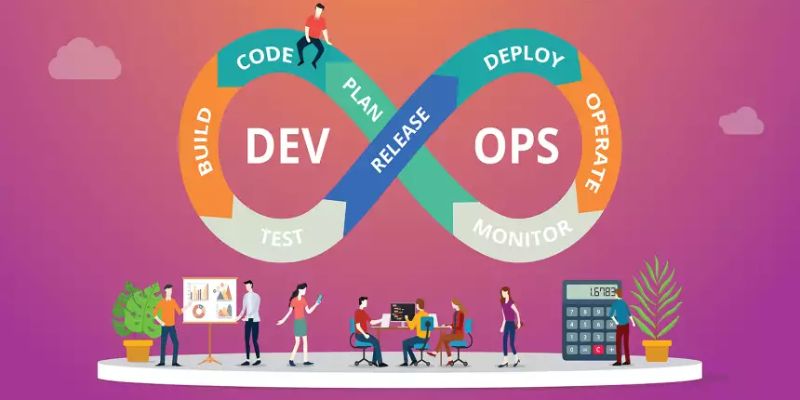

In today’s fast-paced tech world, delivering software quickly and efficiently is crucial for business success. Two popular approaches that help teams achieve this are Agile and DevOps. While both focus on improving the software development process and increasing productivity, they are not the same. Agile is all about breaking down large projects into smaller, manageable tasks and delivering them in short time cycles. DevOps, on the other hand, focuses on combining development and operations teams to automate and streamline the entire software lifecycle. Many people get confused between the two because they both aim for faster delivery and better quality, but they have different principles and practices. In this blog, we will explore the key differences between DevOps and Agile and help you understand how each one works in real-world scenarios.
Focus and Objectives
Agile mainly focuses on improving the process of software development by making it more flexible and adaptive to change. It encourages teams to work closely with customers and deliver working software in short, iterative cycles called sprints. DevOps, on the other hand, aims to bridge the gap between development and operations teams. Its goal is to automate the software delivery process, reduce manual tasks, and ensure that applications are released quickly and reliably. While Agile emphasizes the “how” of development, DevOps pays attention to the “how” of both development and deployment. If you’re interested in mastering these practices, a DevOps Course in Coimbatore can provide hands-on experience with these automation processes.
Team Structure
Agile usually involves cross-functional teams that include developers, testers, designers, and sometimes product managers. These teams work together throughout the development process, sharing ideas and feedback frequently. DevOps brings together two traditionally separate teams-development and operations-into one integrated unit. This team is responsible not only for writing code but also for testing, deploying, and monitoring it in the live environment. So, while Agile focuses on collaboration within the development team, DevOps promotes collaboration across the entire IT organization.
Tools and Automation
AWS empowers DevOps teams to achieve faster deployment, leveraging a suite of automation tools like Jenkins, Docker, and Kubernetes, which are essential for continuous integration, continuous testing, and continuous delivery. While Agile methodologies emphasize human communication and adaptive planning, automation is a core component of DevOps, driving improved deployment speed.
Delivery and Release Cycles
Agile follows a time-boxed delivery cycle, often with sprints that last two to four weeks. At the end of each sprint, a working piece of software is delivered. The release might not go live immediately, but the product is ready. DevOps emphasizes continuous delivery, meaning updates can be pushed to production frequently, sometimes even multiple times a day. DevOps enables faster and more frequent releases by automating much of the deployment process. Learning through a DevOps Training in Madurai can equip you with the skills to manage these continuous deployment pipelines.
Communication and Collaboration
In Agile, communication is key. Teams hold daily stand-up meetings, sprint reviews, and retrospectives to ensure everyone is on the same page. Customer feedback is regularly collected and used to adjust the product. DevOps focuses on collaboration too, but it’s more about breaking down silos between developers and IT operations. This means both teams work together using shared tools and processes to achieve a common goal. While Agile prioritizes team-level communication, DevOps pushes for organizational-level collaboration.
Metrics and Measurements
Agile teams usually track metrics like velocity, sprint burndown charts, and story points to measure how much work is completed during each sprint. These metrics help teams improve their planning and efficiency over time. DevOps focuses on different metrics such as deployment frequency, lead time for changes, and mean time to recovery (MTTR). These help teams understand how quickly and reliably they can deliver software and fix issues. So, the way success is measured differs between Agile and DevOps.
Customer Involvement
Agile actively involves customers or product owners throughout the development process. Regular feedback is gathered and used to shape the product in real time. This ensures the end product meets the customer’s expectations. In DevOps, customer involvement is indirect. While customer feedback is still important, it’s usually collected after deployment through monitoring tools, surveys, or support tickets. A DevOps Training in Pondicherry can show you how to gather and act on this post-deployment feedback effectively.
Cultural Differences
Agile promotes a culture of flexibility, openness to change, and continuous improvement within development teams. It encourages individuals to take ownership of their work and contribute to the team’s goals. DevOps builds a culture of shared responsibility, transparency, and automation across the entire software lifecycle. It encourages breaking down traditional roles and working as one unified team. While both promote collaboration and continuous improvement, Agile is more focused on development dynamics, whereas DevOps promotes a broader cultural shift across departments.
Use Cases and Suitability
Agile is best suited for projects where customer requirements are expected to change frequently. It’s widely used in startups, mobile app development, and situations where early feedback is crucial. DevOps is more suitable for projects that require frequent releases, high availability, and large-scale deployments. It’s often used in enterprise environments, cloud-based applications, and organizations looking to scale their development and operations efficiently. While Agile helps build the right product, DevOps ensures that product reaches the users in the best way possible.
Both Agile and DevOps play important roles in modern software development, but they serve different purposes. Agile focuses on improving how teams develop software through regular feedback and short delivery cycles. DevOps focuses on how software is tested, released, and maintained by combining development and operations teams. Understanding the differences between Agile and DevOps can help organizations choose the right approach-or even combine both-to improve their workflows and deliver better products to their customers. Whether you’re starting with Agile, transitioning to DevOps, or integrating both, the key is to focus on collaboration, continuous improvement, and delivering value to users efficiently. A well-structured DevOps Training in Tirupur can be your first step toward achieving this balance.
Also Check:
How Is the DevOps Landscape Evolving with the Rise of Cloud Technologies?